

Worms are one of the most common health issues cats face, and yet many owners remain unaware that their pet is infected until the symptoms are much further long. That’s because cats can carry infestations whilst seeming perfectly happy and healthy on the surface. If worms aren’t addressed, they can steal nutrients, cause discomfort, and in some cases, be passed on to the humans in the household.
Spotting the signs doesn’t need to be difficult once you understand what to look out for in the early stages. In this guide, we’ll cover the main types of worms found in UK cats, how they get infected in the first place, what symptoms to watch for, and how to treat and prevent infestations effectively.
Types of worms in cats
There are three main varieties of worms that can affect your cat here in the UK: roundworms, tapeworms, and hookworms. Each has their own distinct appearance and set of symptoms, so being able to differentiate between them is the first step to efficient treatment.
Roundworms
Roundworms are the most frequently diagnosed intestinal parasite in cats. They resemble thin strands of spaghetti, growing to around 15cm in length. They live in your cat’s stomach and intestines.

Tapeworms
Tapeworms are long, flat, and made up of segments that resemble grains of rice. Mature segments break away from the worm and are passed in your cat’s faeces or found stuck to the fur around their tail.

Hookworms
The most common variant can even be absorbed via the skin which can lead to a larger infestation. They can pose serious risk, particularly to kittens or unwell cats, attaching themselves to the intestinal lining and feeding on blood. If you suspect your cat has Hookworms, take them to your vet immediately.

For more information on other pet parasites, check out our detailed guide on common pet parasites, which takes a broader look at fleas, ticks, and lice.
How do cats get infected with worms?
Cats are exposed to worms in ways you may not realise. One route to infection is ingesting contaminated food or water that has been exposed to infected faeces. Cats can also pick up worms through direct contact with infected faeces from other cats or dogs, which can be hard to avoid if your cat spends time outdoors.
Cats that chase and eat rodents or birds are regularly exposed to roundworm and tapeworm larvae carried by these animals. For kittens, the risk can start even earlier as worm larvae can be passed from mother to kitten through the milk. This means some cats are infected before they’ve even stepped outside.
Fleas can also play a surprising role in worm transmission. Certain tapeworm species rely on fleas as carriers, so a flea infestation can quickly become a worm problem too. Even if your cat doesn’t venture outside, that doesn’t mean they’re completely safe. Contaminated soil, sandpits, and stray fleas brought in on shoes or clothing can introduce worms into your home.
How can you tell if a cat has worms?
Worms don’t always have clear symptoms, especially in the early stages of infestation. However, as the worms develop, you may start to notice:
- Changes in appetite and unexplained weight loss
- Visible worms or segments in your cat’s stool or vomit
- Diarrhoea or constipation
- Lethargy and a general lack of energy
- A dull coat and poor grooming habits
- Abdominal bloating or discomfort, kittens may appear to be potbellied
- Anal itching with excessive cleaning and scooting behaviour, where your cat drags its bottom along the floor
If you notice any of these signs, treat your cat for worms as soon as possible, even if you’re not entirely sure which variation is involved.
Treating worms in cats
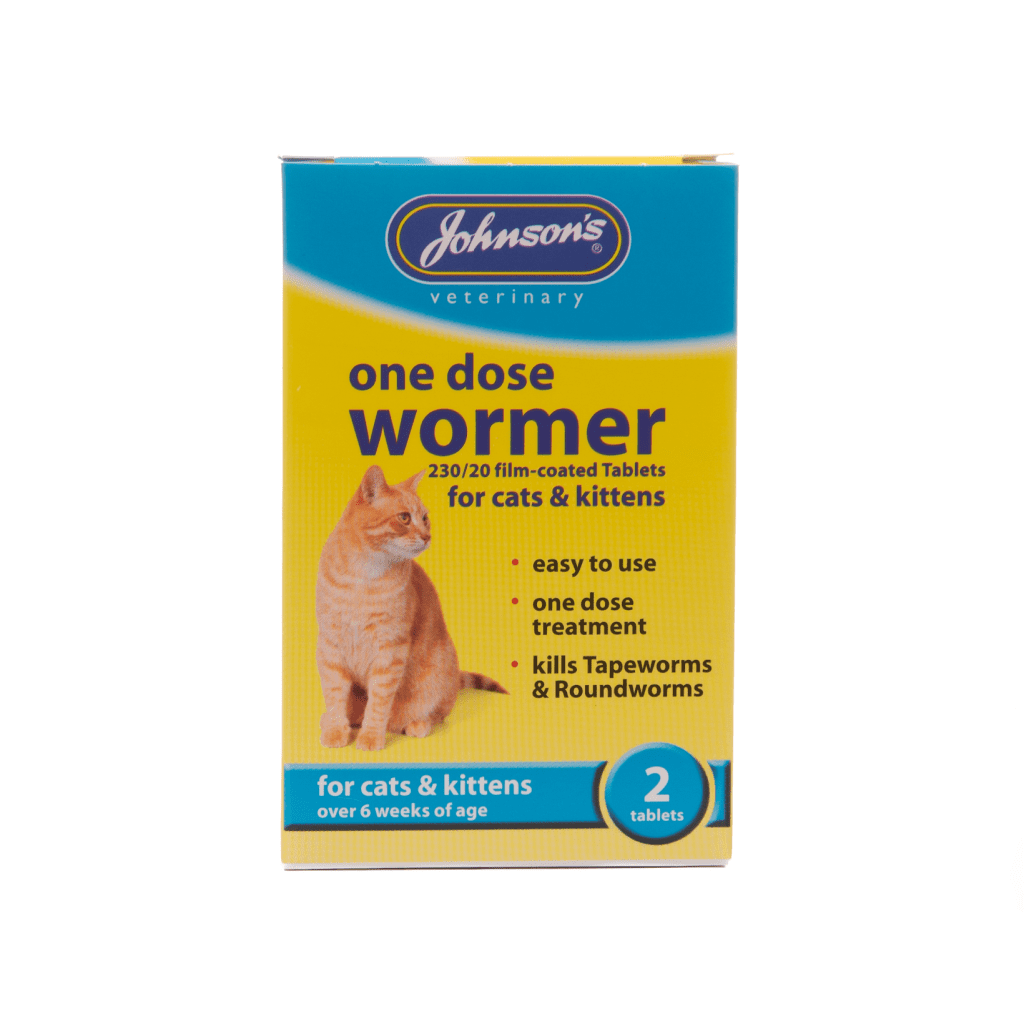
Treating worms in cats doesn’t have to result in an expensive trip to the vet. Over-the-counter worming products, such as Johnson’s One Dose Wormer for Cats and Kittens, are formulated to kill both roundworm and tapeworm in a single dose. This product is suitable for cats and kittens over 6 weeks of age.
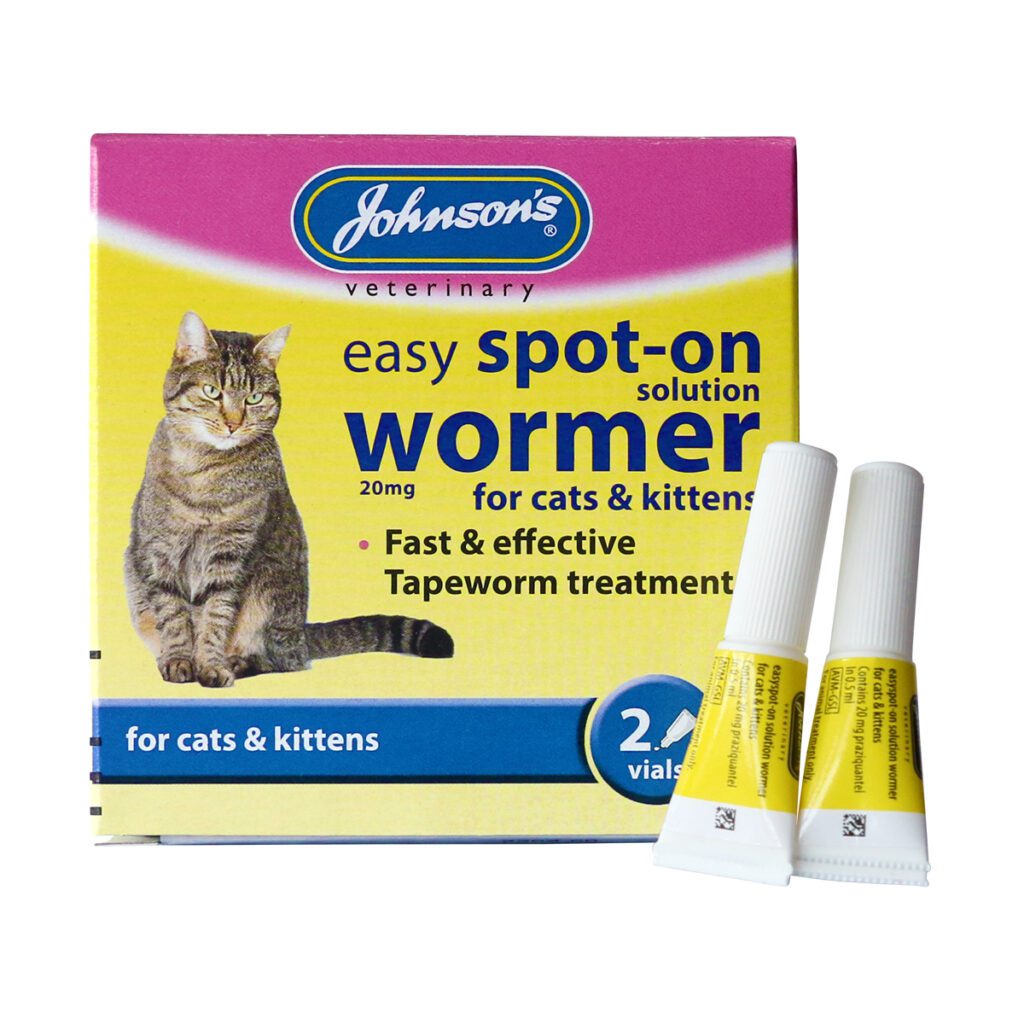
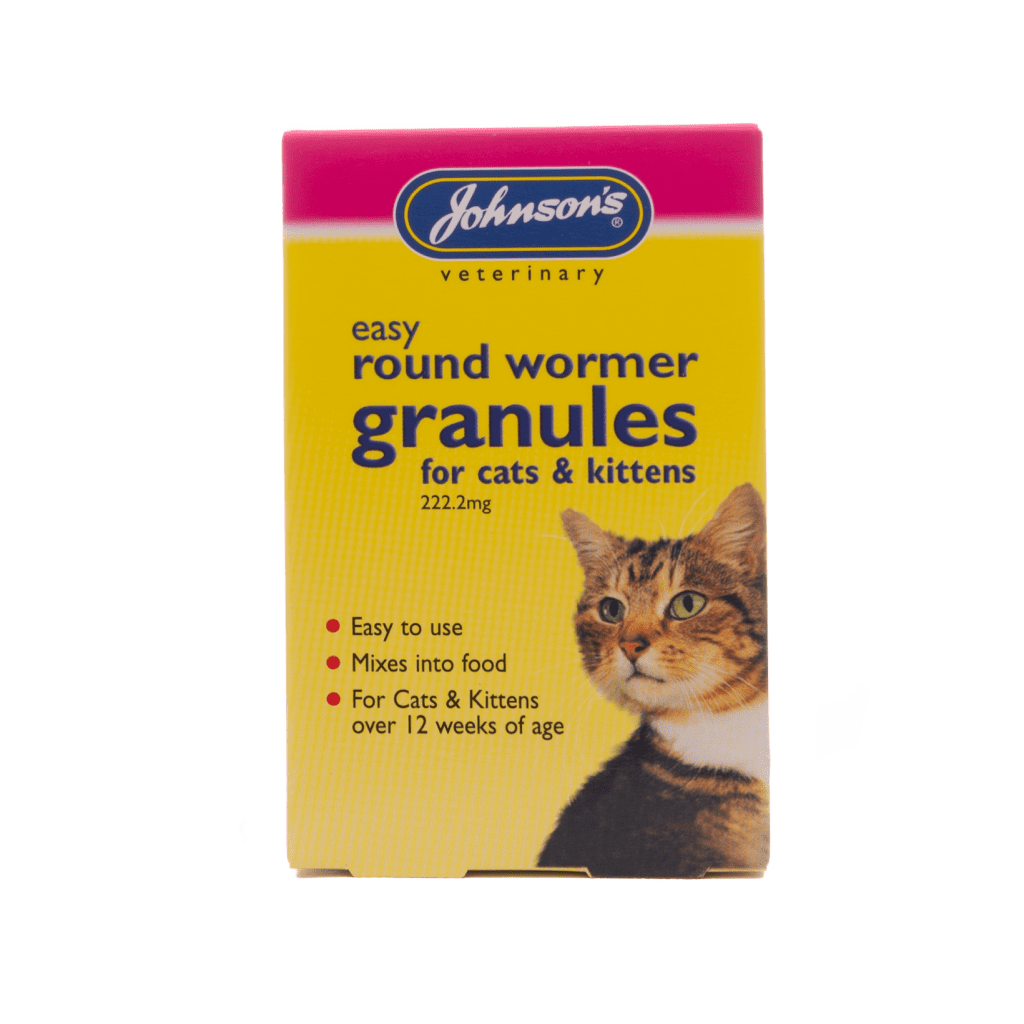
For cats who struggle to take tablets, there’s Easy Spot-on Wormer for tapeworms and Easy Wormer Granules for treating roundworms.
Treating kittens vs adult cats
Kittens are more vulnerable to worms, as they can pick up larvae through their mother’s milk. Always refer to the product packaging for what age or weight your kitten can be treated – not every product is suitable for young, small kitties. Lactating mothers should be treated at the same time to prevent re-infection.
Adult cats should be wormed according to their lifestyle. A cat that explores regularly or spends a lot of time outdoors will need more frequent treatment than a housecat with limited exposure to potential sources of infection.
How long does cat worming treatment take to work?
Worming treatments work quickly to kill worms already present in your cat’s system, but they don’t provide long-term protection against reinfestation. That’s why keeping a close eye on your cat’s health is so important. Look out for signs listed above, as they can all be indicative of worms.
Can humans get worms from cats?
Yes. This is known as zoonosis, and roundworms are the most common type transmitted from cats to humans in the UK. Worm eggs can be picked up through direct contact with an infected cat, contaminated soil, or surfaces your cat has come into contact with.
To reduce the risk to your family:
- Wash your hands after handling your cat or cleaning their litter tray
- Dispose of cat faeces promptly and responsibly
- Discourage your cat from hunting or scavenging where possible
- Monitor your cat regularly for signs of worms, particularly if you have young children or vulnerable family members in the home
Worm-free is the way forward
Worms are a possibility, but they don’t have to be a serious threat to your cat’s health if you know what to look for. Watch out for changes in appetite, energy levels, coat condition, and toileting habits, and don’t hold back for obvious symptoms to appear before taking action.
The sooner you spot the signs; the sooner you can get your cat the help they need. Staying vigilant and seeking advice at the first sign of infestation goes a long way for keeping your feline friend happy, healthy, and worm-free.