


Found a flea on your pet and wondering how to get rid of it quickly? A lot of pet owners can relate. Flea infestations are one of the most common problem owners face, and they have a habit of striking when you least expect it.
Understanding how long flea treatments take to work is the key to managing expectations and knowing when a follow-up treatment is required. Whilst many products take immediate action, fully clearing an infestation can take far longer because of flea development and multiplication.
How long do flea treatments take to work?
Most topical flea treatments kill adult fleas within 12-24 hours of application, with full effectiveness against adult fleas typically achieved within 24-48 hours.
Oral treatments can work even faster. Johnsons 4Fleas Tablets for Dogs and 4Fleas Tablets for Cats, for example, start working in as little as 15 minutes, making them an ideal response to active infestation.
However, most flea treatments only target adult fleas, rather than the eggs, larvae, or pupae that make up the rest of the flea lifecycle. In fact, adult fleas represent just 5% of the total flea lifecycle, with eggs, larvae, and pupae making up the remaining 95%.

This means that even though adult fleas die quickly, it can take up to several weeks to combat a flea problem, as new adults continue to hatch from eggs and pupae already present in your home. Pupae are particularly resilient and can remain dormant for weeks or months before hatching when conditions are right.
Does spot-on kill fleas?
Yes, spot-on treatments do kill fleas. They’re one of the most popular ways to tackle an infestation. These treatments are applied directly to your pet’s skin, usually in a place they can’t reach like the back of the neck or between the shoulder blades, where they’re absorbed and distributed through the skin’s natural oils.
Spot-on treatments begin working within hours of application, with peak effectiveness reached within 24-48 hours. Some formulations may take a little longer, depending on the product used and which stage of the flea lifecycle your pet has picked up.
Not all spot-on treatments are designed to do the same thing. Some only target adult fleas, which means they won’t stop eggs and larvae developing in your home. Others, like Johnsons Guardian Plus Spot On, go a step further by targeting the full flea lifecycle. This formula not only kills adult fleas, lice, and ticks, but also prevents the development of eggs, pupae, and larvae, giving you a much better chance of breaking the cycle for good.
Why is my dog still itching after flea treatment?
You’ve treated your dog, the fleas should be dying off, so why is your dog still scratching? There are a few possible explanations:
Itching can persist even after fleas are dead. Just because the fleas are gone doesn’t mean the irritation disappears instantly. Skin can remain inflamed and itchy for several days whilst in recovery.
Flea allergy dermatitis (FAD) could be at play. Some dogs are hypersensitive to flea saliva, which means even a single bite can trigger intense itching and discomfort that outlasts the fleas themselves.
Secondary skin infections may have developed. Persistent scratching can break the skin, creating an entry point for bacteria and leading to infections that need separate treatment.
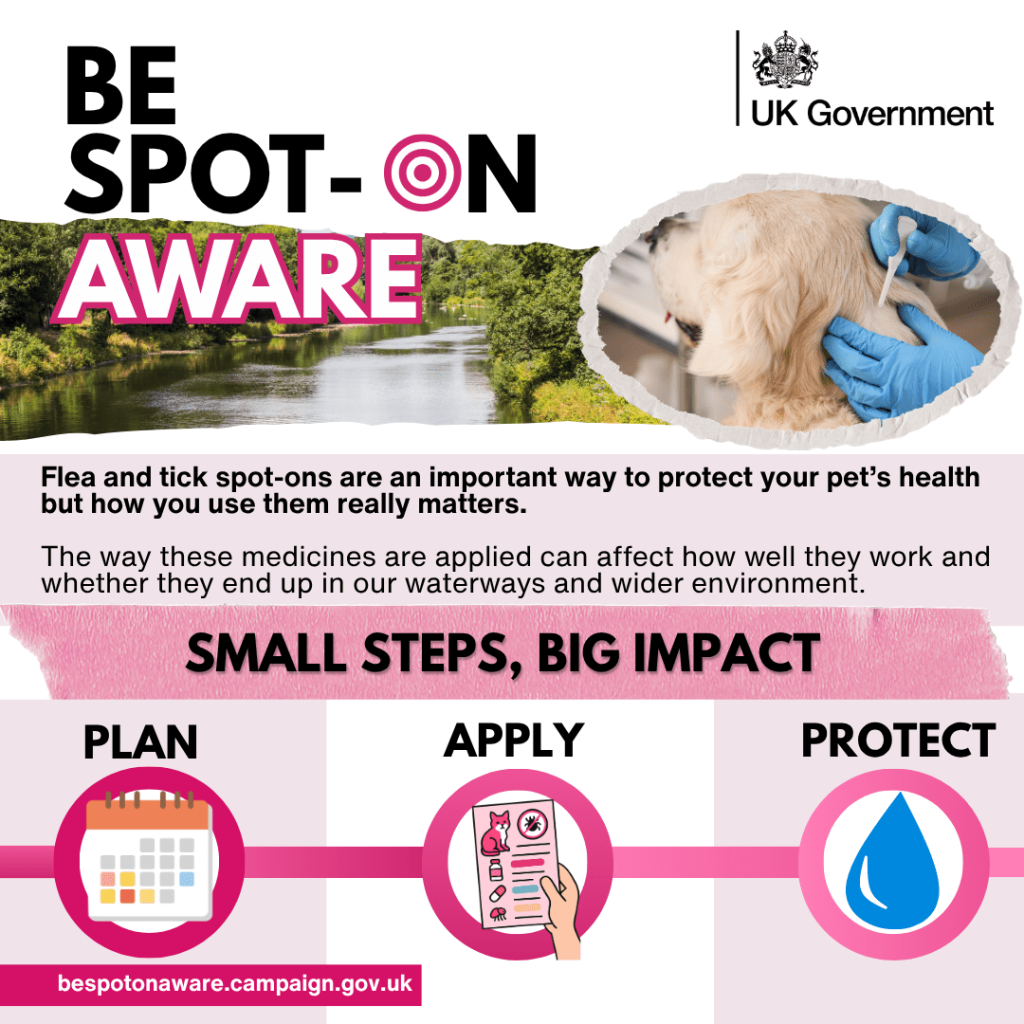
Your treatment’s effectiveness may have been compromised. If you bathed your dog or let them swim shortly after applying a topical treatment, this can wash away the product before it’s had a chance to work properly. Always check the product label for guidance on bathing restrictions. Johnson’s proudly support the Government’s campaign to Be Spot On Aware, which encourages the responsible use and disposal of spot-on treatments for dogs and cats.
Flea treatment not working?
If you’ve treated your pet and you’re still seeing fleas (or signs of them), don’t panic. It’s actually quite common, and there are steps you can take to get back on track.
Verify correct application. Double-check that topical treatments were applied properly, directly onto the skin rather than just the fur, and in the location as directed on the packaging.
Ensure the treatment suits your pet’s weight and age. Flea products are formulated for specific species, weight ranges and age groups. Using the wrong dosage can significantly reduce effectiveness, so make sure you’ve got the correct product for your pet.
Confirm your pet isn’t being reinfested from untreated areas. If other pets in the household haven’t been treated, or if your pet regularly visits places with other animals, reinfestation is a high possibility.
Treating your home with environmental treatment alongside pet treatment. Treating your pet alone won’t solve the problem if fleas are still living in your carpets, bedding, and furniture, you must treat your home too. For a full breakdown on treating fleas in your home, read our guide on how long fleas can survive in your home and how to tackle them.
Give the treatment time to work. New fleas will keep hatching from eggs and pupae already in your home, so spotting the odd flea in the weeks after treatment is normal and doesn’t mean the product has failed. Stick to the treatment schedule on the pack rather than re-treating early, as using products more often than directed, or combining different treatments, can cause unexpected complications.
If you’ve followed all the steps mentioned in the full treatment cycle and found that fleas are still a problem, or your pet has started to show signs of a flea allergy, then you should seek advice from your vet.
Final thoughts
Flea treatment effectiveness varies depending on the product you use and how established the infestation is. As a general rule, most treatments start showing results within 24-48 hours, but it can take up several weeks to see a complete resolution.
Patience is key. Being consistent with pet treatment and treating your home gives you the best chance of breaking the cycle for good. If you’re still struggling after following the steps above, don’t hesitate to reach out to your vet for tailored advice.


